Trailers Are Secretly Teaching You Scales (and You Keep Falling for It)
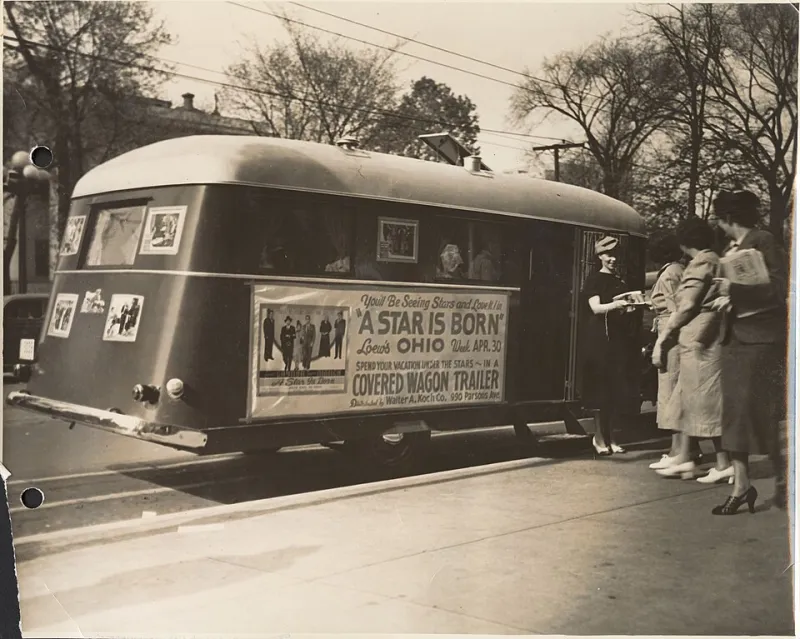
Photo: Unknown, No restrictions, via Wikimedia Commons
You do not go to the movies for music theory. You go for the big screen, the overpriced popcorn, and the chance to watch something explode in Dolby. But before the movie starts, the trailer house has already started your lesson. The rising brass, the ticking clock, the sad piano—these are not random sounds. They are reliable tools, and they are training your ear whether you signed up or not.
I am not saying every trailer composer is secretly running a Scale Scouts curriculum. I am saying the cliches work because they teach us something. Here are five overused trailer moves, what each one does to your brain, and a beginner-friendly drill you can run with a phone and a streaming service.
1. The Rising Brass Swell
What it is: a low brass line that climbs, often in stepwise motion, while the drums pound and the screen fades to black. What it teaches: scale direction and tension. A rising line feels like progress, even if the harmony underneath is not changing much. Your ear starts predicting the next note. That prediction is the beginning of melodic hearing.
Try this: find a trailer with a big brass swell on a streaming service. Pause just before the final hit. Hum what you think the next note will be. Then play it. If you were off, hum the line backward. If you were close, sing the whole rise on an ah. Do it twice. You are not memorizing the trailer; you are practicing scale direction.
2. The Ticking Pulse
What it is: a clock, a metronome, a heartbeat, or a synth tick that gets faster and louder. What it teaches: rhythm and subdivision. A tick is a steady beat. When it doubles, you feel eighth notes. When it adds a second layer, you feel the grid. Trailers use this to make two minutes feel like a countdown.
Try this: tap the tick with your foot. Then tap every other tick. Then tap twice for every tick. Say out loud, one and two and three and. Mute the trailer and keep tapping. Start the trailer again. Did you stay on the grid? This is the same skill you need for playing in a band, just with more explosions.
3. The Minor-Key Piano Motif
What it is: a lone piano playing a simple, repeating figure in a minor key. What it teaches: scales and mood. Major and minor are not just labels; they are different sets of intervals. A minor third can sound sad, tense, or mysterious depending on context. Trailers lean on that ambiguity.
Try this: play a C major scale on a keyboard app. Then play an A minor scale using the same white keys. Same notes, different home base. Hum the piano motif from the trailer. Find its home note. Then move the whole motif up one key. You just transposed it. That is a real theory skill, and you learned it from a preview for a movie about a haunted house.
4. The Braam
What it is: a low, aggressive brass or sub-bass hit, often with a metallic tail. What it teaches: intervals and weight. The braam usually lands on the root, or an octave below it. It feels huge because low frequencies move air, but it also gives your ear a clear anchor. When the braam hits, you know where home is.
Try this: listen on headphones. Hum the braam at the pitch you hear. Then hum it an octave higher. Then find the root on a keyboard app. You are checking whether you can match a very low sound without losing the note. If it is too low, hum the octave above. That is not cheating. That is translation.
5. The Final Major Chord
What it is: after all the minor-key dread, the trailer ends on a bright major chord. What it teaches: resolution and chord quality. Major does not always mean happy, and minor does not always mean sad. But a shift from minor to major creates a feeling of arrival. Trailers use it to say: the movie is coming, and it will be worth it.
Try this: pause a trailer right before the final chord. Predict whether it will be major or minor. Then listen. If you are wrong, hum the chord you expected, then the one you got. Notice the difference in the third. That one note is often the whole story.
The Trailer Is Your Free Ear-Training App
Here is the opinion part: we spend a lot of time looking for formal ear-training tools, and not enough time noticing that we are already surrounded by them. A trailer is a two-minute masterclass in tension, rhythm, and scale color, and it is free with your streaming subscription. The next time the lights dim, do not tune out the previews. Tune in. Your ear is already watching.